Understand the task hierarchy
Distinguish orientation, investigation, and action. The dashboard helps someone understand the situation; a module helps them work on a record.


02 / Information architecture
Information architecture creates a predictable path from a broad goal to the specific information or action someone needs.
Where should someone go next—and will that choice feel obvious?
Distinguish orientation, investigation, and action. The dashboard helps someone understand the situation; a module helps them work on a record.
Give financial responsibilities recognizable names and stable places. Consistent navigation reduces the need to relearn each module.
Carry the same structural patterns from summaries into detailed lists, so moving deeper does not feel like entering a different product.
In practice / DineroSync
DineroSync brings balances, transactions, expenses, checks, and other financial work into one product. The structure separates an overview of the business from the detail of an individual task.
Explore the project evidence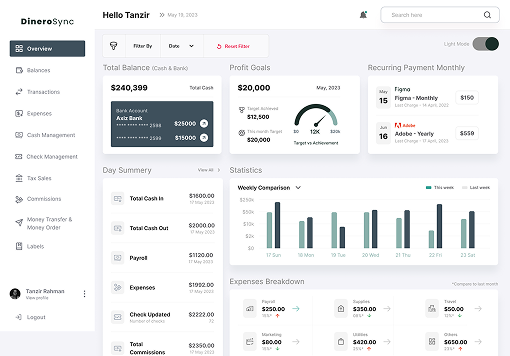
The details that matter
| Level | Purpose | Example |
|---|---|---|
| Overview | Understand the current situation | Dashboard summaries and balances |
| Module | Focus on a responsibility | Expenses, transactions, or checks |
| Record | Inspect and complete a task | Review details and use a contextual action |
Next / Design, in practice