Finding the right fit
Discovery needs to help candidates narrow their attention to relevant jobs and companies.


MoonsJob / Case study 03
A career platform connecting job discovery, interview preparation, referrals, and application progress.
Defined the primary navigation, connected the referral and application journeys, and designed the mobile interfaces.
01 / OVERVIEW
The initial brief was for an affordable job platform for candidates and recruiters, with straightforward navigation and application flows.
The product direction expanded around referrals, interview preparation, and a more visible application journey. These features give candidates ways to prepare and progress beyond browsing a list of jobs.
How can a career platform help people discover an opportunity, prepare for it, and understand what happens next?
02 / CONTEXT
Candidates can spend time filtering irrelevant opportunities while struggling to understand their application status. Recruiters need enough context to assess relevant profiles.
Discovery needs to help candidates narrow their attention to relevant jobs and companies.
Applied, invited, and shortlisted states need to be visible in one place.
Candidates need a path to strengthen their profile and prepare for an interview, alongside submitting applications.
03 / DESIGN DECISIONS
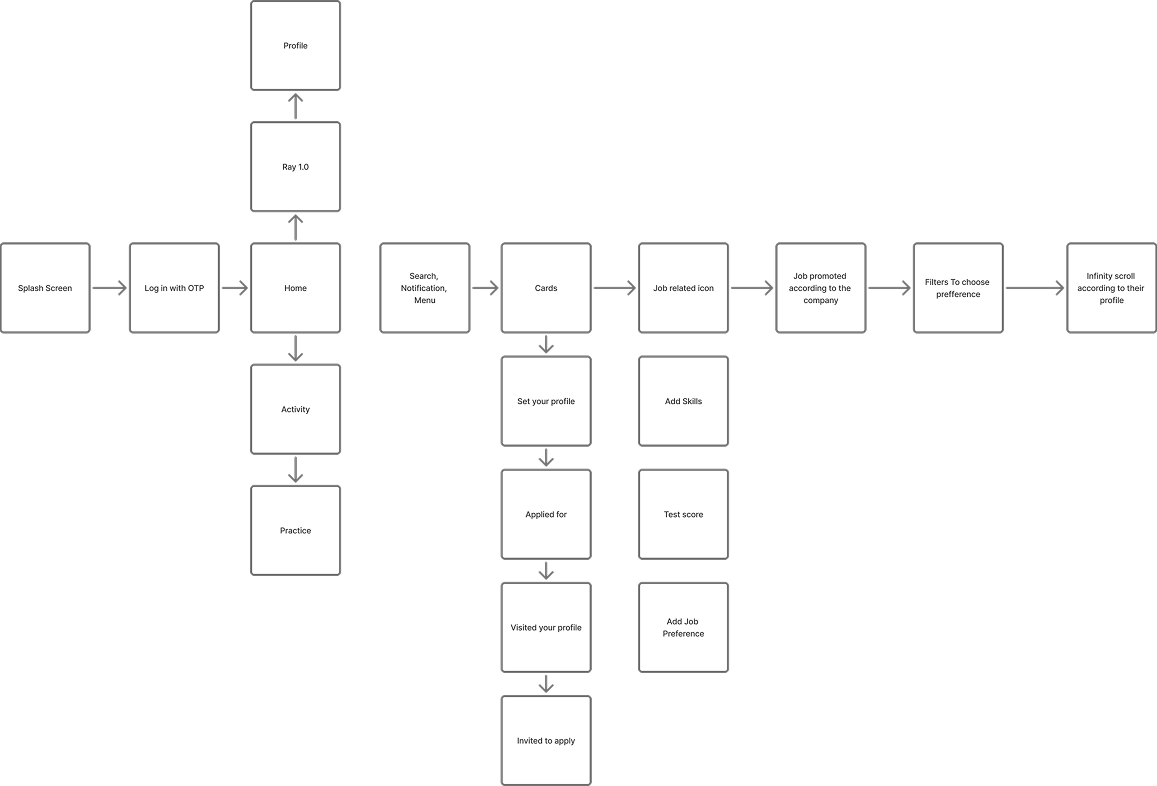
Organize the experience around Home, Activity, Interview Prep, referrals, and Profile. Each area supports a distinct part of the job-search journey.
Design intent: use a small set of recognizable destinations instead of asking the home feed to handle every task.
Collect application states, invitations, profile visits, and relevant activity in one destination. This gives candidates a place to return when they need to understand progress.
Why this matters: applying is only one step; follow-through needs its own clear experience.
Moon 1.0 introduces the base referral flow. Moon 2.0 provides the premium referral-assistance path. Keeping these journeys distinct helps communicate their different scopes.
Trade-off: a premium path needs a clear explanation of its support and value, without implying a guaranteed hiring outcome.
Interview-practice content supports readiness, while profile information brings skills, preferences, scores, and credibility signals together.
Design intent: make candidate information useful for both personal progress and recruiter evaluation.
04 / PRODUCT FLOW
Explore jobs, use filters, and find companies that fit the candidate profile.
Build the profile and use interview-preparation content.
Choose the appropriate opportunity and referral path.
Return to Activity for application states and relevant updates.
05 / THE INTERFACE
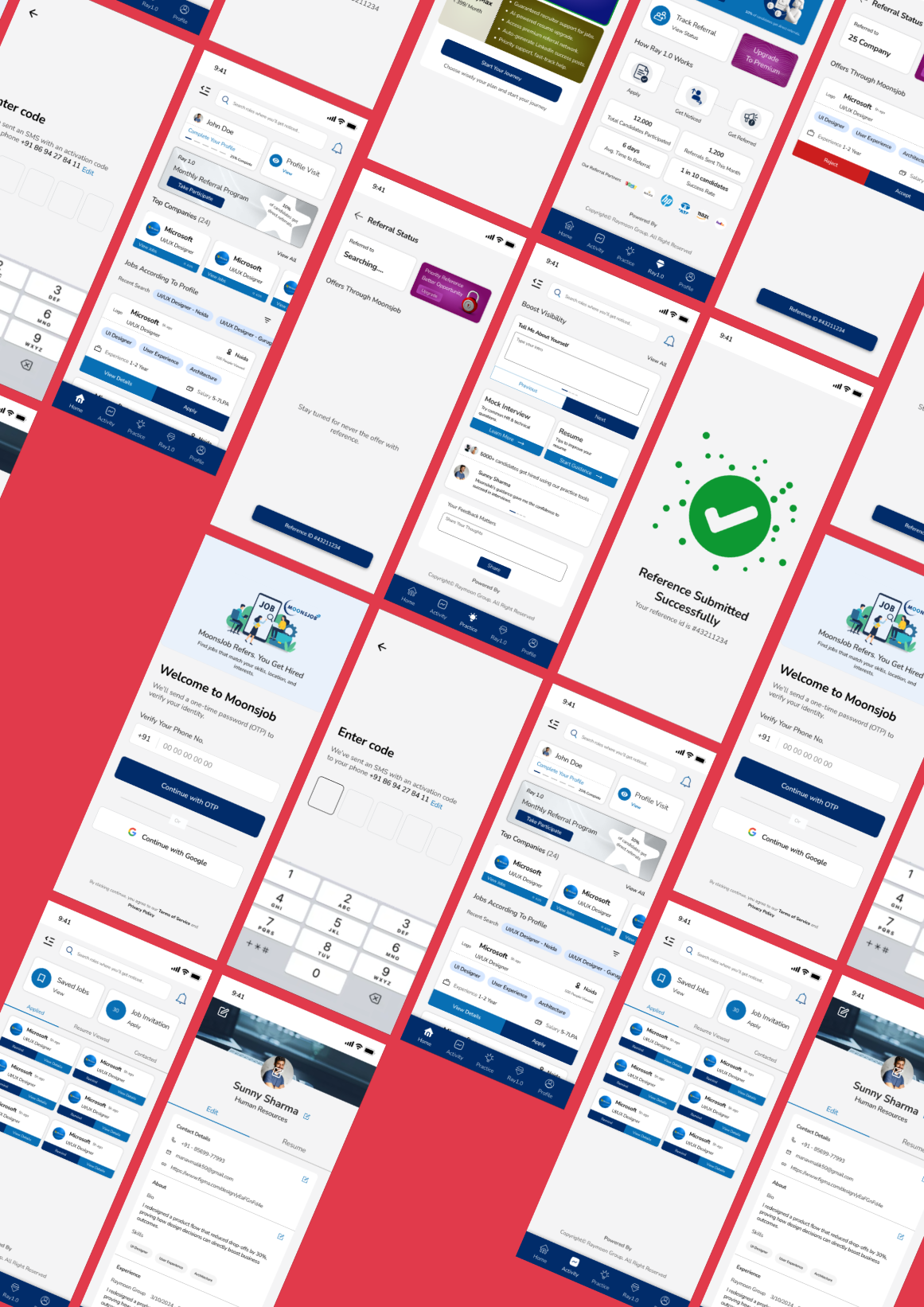
The mobile interface explores how discovery, profile building, activity, and referral journeys fit together. Consistent navigation and shared visual patterns connect these different tasks.
06 / VALIDATION PLAN
Proposed usability checks for the next iteration. These are evaluation plans, not completed research findings.
| Task | Question to answer | Signal to observe |
|---|---|---|
| Find an application’s status | Can a candidate locate Activity and explain the current state? | Task completion and status comprehension. |
| Compare the referral paths | Can a candidate explain the difference between Moon 1.0 and Moon 2.0? | Comprehension and mismatched expectations. |
| Prepare a profile | Can the candidate identify and complete the information needed? | Completion, drop-off points, and unclear labels. |
07 / OUTCOME & LEARNING
The design direction moves the product from a broad job-board brief toward connected candidate journeys: discovery, preparation, referrals, and application tracking.
I would check whether candidates can explain the two referral options, find an application’s status, and complete profile setup. Comprehension and task-completion feedback should inform the next design iteration.
Next project / HRMS